
ACP Cladding in Chennai: Benefits, Applications and How to Choose the Right Solution
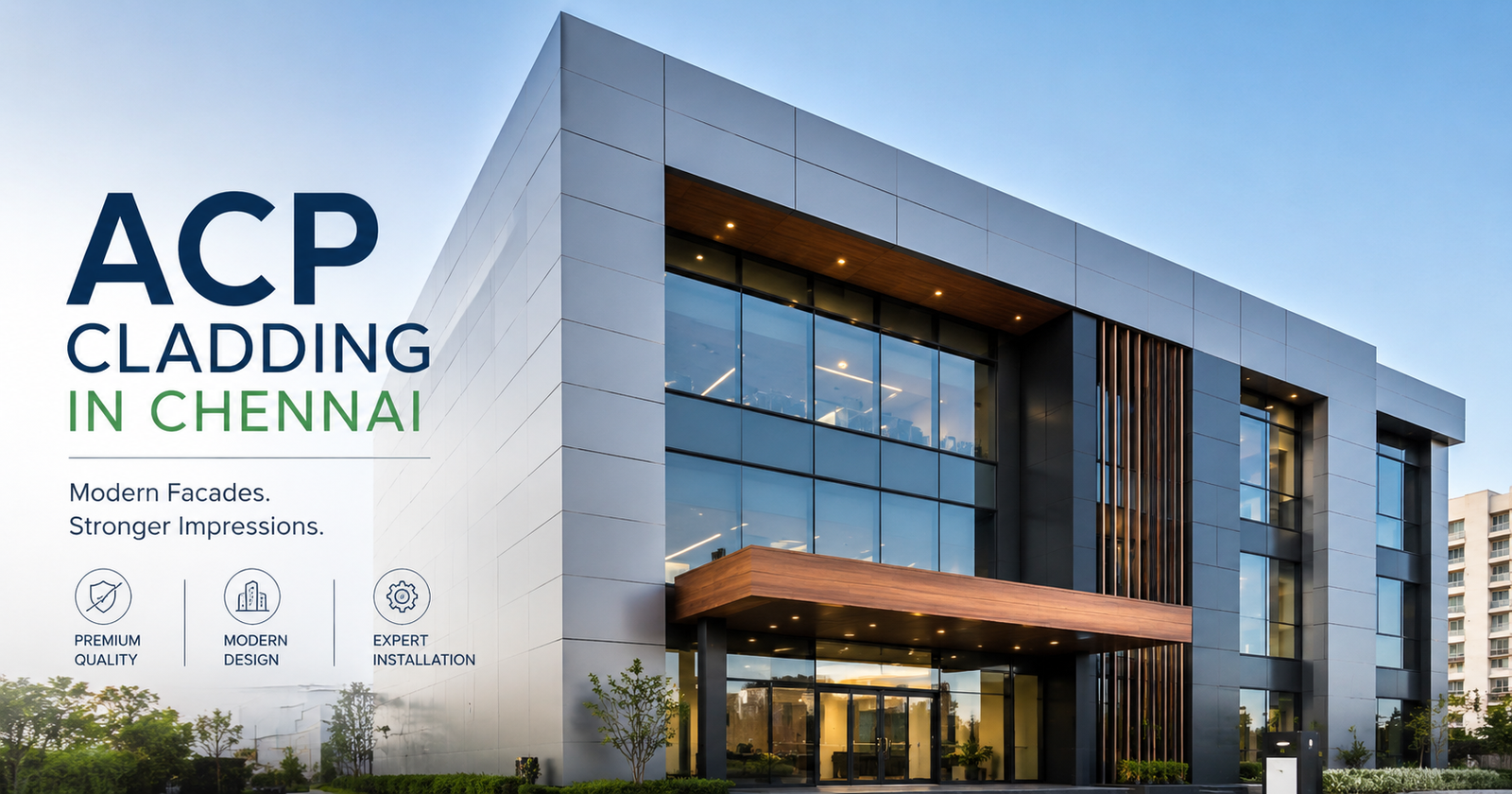
ACP cladding is an architectural facade solution made using Aluminium Composite Panels and is commonly considered for commercial buildings, offices, showrooms, residential properties and renovation projects. In Chennai, selecting the appropriate panel specification, facade design, supporting framework and installation method is important because buildings are exposed to heat, humidity, rain and coastal environmental conditions. Aura Cladding & Infrastructures provides ACP cladding and related exterior, glazing, aluminium and interior construction services in Chennai and other cities in Tamil Nadu.
Modern buildings need more than structural strength. The exterior also plays an important role in creating the right architectural appearance, protecting surfaces and maintaining the overall character of a property.
ACP cladding, or Aluminium Composite Panel cladding, is a popular architectural solution used to create clean, contemporary and visually appealing building exteriors. ACP panels consist of aluminium surfaces bonded to a core material and are commonly used for facade applications, commercial buildings, offices, showrooms, residential properties and other architectural projects.
For property owners, architects and builders looking for ACP cladding in Chennai, the right solution should balance appearance, material selection, installation quality and long-term maintenance.
Why Is ACP Cladding Popular in Chennai?
Chennai's coastal climate can be demanding on building exteriors. Heat, humidity, rain, dust and exposure to the outdoor environment make material selection particularly important.
ACP cladding offers architects and building owners considerable flexibility in exterior design. Depending on the project requirements and selected panel specifications, ACP can be used to create contemporary facades, highlight architectural features and give older structures a refreshed appearance.
The material is also relatively lightweight compared with many traditional facade materials, making it suitable for a wide range of architectural applications when properly designed and installed.
Key Benefits of ACP Cladding
1. Modern Architectural Appearance
One of the biggest reasons ACP is used in building facades is its clean and contemporary appearance.
ACP panels can help create smooth surfaces, geometric patterns, contrasting sections and distinctive facade designs. This makes them suitable for offices, commercial buildings, retail spaces, institutions and modern residential properties.
2. Design Flexibility
Architectural projects rarely follow a one-size-fits-all design.
ACP panels can be fabricated and installed in different configurations to complement the building's architecture. Designers can combine colours, finishes, shapes and panel arrangements to create a distinctive exterior.
This flexibility allows ACP cladding to work with both simple and more detailed facade concepts.
3. Lightweight Construction Material
ACP panels are comparatively lightweight, which can make handling and installation more convenient than heavier facade materials.
However, the complete cladding system must still be properly engineered. The supporting framework, fixing method, panel specification and site conditions all need to be considered before installation.
4. Helps Refresh Existing Buildings
ACP cladding is not limited to new construction.
Existing commercial buildings, offices, shops and other properties can use facade cladding as part of an exterior renovation. A well-designed ACP facade can significantly change the visual identity of a building without completely rebuilding the existing exterior.
5. Easy to Maintain
A properly installed ACP facade can be relatively straightforward to maintain. Regular cleaning and periodic inspection can help preserve the appearance of the panels and identify issues with joints, sealants, fixings or other components at an early stage.
The exact maintenance requirements depend on the panel finish, installation system and environmental exposure.
6. Suitable for Different Building Types
ACP cladding can be considered for a variety of applications, including:
- Commercial buildings
- Corporate offices
- Retail showrooms
- Shops and business establishments
- Residential buildings
- Institutional buildings
- Building entrances
- Exterior feature walls
- Renovation and facade improvement projects
- Signage and architectural elements
The suitability of ACP depends on the design, location, building requirements and specifications selected for the project.
ACP Cladding Applications in Chennai
ACP is widely considered for projects where both appearance and practical facade performance are important.
Commercial Buildings
A professional exterior can influence how customers and visitors perceive a business. ACP can be used to create a structured and modern facade for offices, commercial complexes and business establishments.
Retail Showrooms
Showrooms often need strong visual branding. ACP can be incorporated into the exterior design to create clean lines, colour combinations and architectural features that complement the brand identity.
Office Buildings
For corporate spaces, facade design can contribute to a professional visual identity. ACP can be combined with glass, aluminium and other architectural elements to create a contemporary office exterior.
Residential Buildings
ACP can also be used for selected residential facade applications, including balconies, entrance features, exterior walls and architectural highlights.
Renovation Projects
Older properties can be visually upgraded through a carefully planned facade renovation. ACP provides an option for changing the appearance of selected exterior surfaces while working around the existing structure.
What Should You Consider Before Choosing ACP Cladding?
Choosing the panel colour is only one part of an ACP project. Several technical and practical factors should be evaluated before starting the work.
Panel Quality and Specification
Different ACP products are manufactured for different applications. The panel thickness, core, coating, finish and other specifications should be selected according to the intended use.
For larger or more demanding projects, architects and contractors should review the relevant product specifications and project requirements before finalising the material.
Building Design
The facade should complement the architecture of the building rather than simply covering the exterior.
Panel orientation, joints, bends, corners, windows, doors, signage and other architectural elements should be considered during the design stage.
Supporting Framework
The supporting structure is an important part of any cladding system.
The framework should be designed and installed appropriately for the building and facade requirements. Poor alignment or inadequate installation can affect the appearance and performance of the finished facade.
Installation Quality
Even a good-quality material can produce poor results if installation is not carried out correctly.
Accurate measurements, proper fabrication, alignment, fixing, joint treatment and finishing are important for achieving a professional result.
Maintenance Requirements
Before selecting a finish, consider the building's location, exposure and expected maintenance requirements. A practical maintenance plan can help preserve the facade over time.
Typical ACP Cladding Installation Process
Although the exact process varies from project to project, a professional ACP cladding project generally involves several stages.
1. Site Inspection
The building and existing surface are inspected to understand dimensions, access, structural conditions and project requirements.
2. Design and Planning
The facade design, panel layout, colours, finishes, joints and architectural details are planned before fabrication.
3. Measurement
Accurate site measurements are taken to minimise fabrication errors and ensure that panels are produced according to the approved design.
4. Framework Installation
The required supporting framework is installed and aligned according to the project design.
5. ACP Panel Fabrication
Panels are cut, routed, folded or fabricated according to the required dimensions and design details.
6. Panel Installation
The fabricated panels are installed onto the prepared framework using the appropriate fixing system.
7. Joint and Edge Finishing
Corners, joints, edges, openings and other details are finished carefully to create a clean facade.
8. Final Inspection
The completed facade is inspected for alignment, finishing, visible defects and overall workmanship before handover.
How to Choose an ACP Cladding Contractor in Chennai
The contractor you choose can have as much impact on the final result as the material itself.
Before selecting a cladding contractor, consider:
- Previous completed projects
- Experience with similar building types
- Quality of materials used
- Design and fabrication capabilities
- Installation methodology
- Project timelines
- Workmanship and finishing quality
- After-installation support
- Ability to coordinate with other construction teams
It is also useful to discuss the complete scope of work before starting the project so that material specifications, design requirements, framework, fabrication and installation responsibilities are clearly understood.
Why Consider Aura Cladding & Infrastructures?
Aura Cladding & Infrastructures is a Chennai-based construction services company founded in 2010. The company provides ACP cladding along with exterior cladding, glazing, toughened glass, ACP sheets, aluminium partitions, interior works and several other construction-related services.
According to the company's website, Aura Cladding has completed more than 150 projects and has a workforce of more than 150 workers. The company also states that its projects cover luxury, mid-range and affordable segments and that its operations have expanded beyond Chennai to cities including Coimbatore, Trichy and Madurai.
This broader range of services can be useful when a project requires coordination between facade, glazing, aluminium and interior works.
Final Thoughts
ACP cladding can be an effective architectural option for building owners who want to improve the appearance of a property while creating a modern and well-finished facade.
However, the quality of the final result depends on more than the ACP sheet itself. Material specification, facade design, supporting framework, fabrication, installation and finishing all play an important role.
If you are planning ACP cladding in Chennai, start with a proper site assessment and discuss your design, material and installation requirements with an experienced contractor before finalising the project.
For ACP cladding, exterior cladding, glazing and related construction requirements, you can explore the services offered by Aura Cladding & Infrastructures.
Key Takeaways
- ACP cladding is used to create modern and visually appealing building facades.
- ACP can be considered for offices, commercial buildings, showrooms, residential properties and renovation projects.
- Material specification should be selected according to the intended application and project requirements.
- Proper framework, fabrication and installation are essential for a professional facade.
- Chennai's environmental conditions should be considered when planning an exterior cladding project.
- Regular cleaning and inspection can help maintain the facade.
- Choosing an experienced cladding contractor is important for design, fabrication and installation quality.
- Aura Cladding & Infrastructures provides ACP cladding along with exterior cladding, glazing, toughened glass, aluminium and interior-related services.
Frequently Asked Questions
What is ACP cladding?
Is ACP cladding suitable for Chennai buildings?
Where can ACP cladding be used?
Sources & References
- https://auracladding.com/
- Aura Cladding & Infrastructures official website, Services and About sections
- Aura Cladding & Infrastructures official website, company statistics and project information